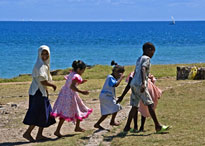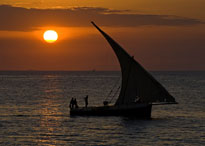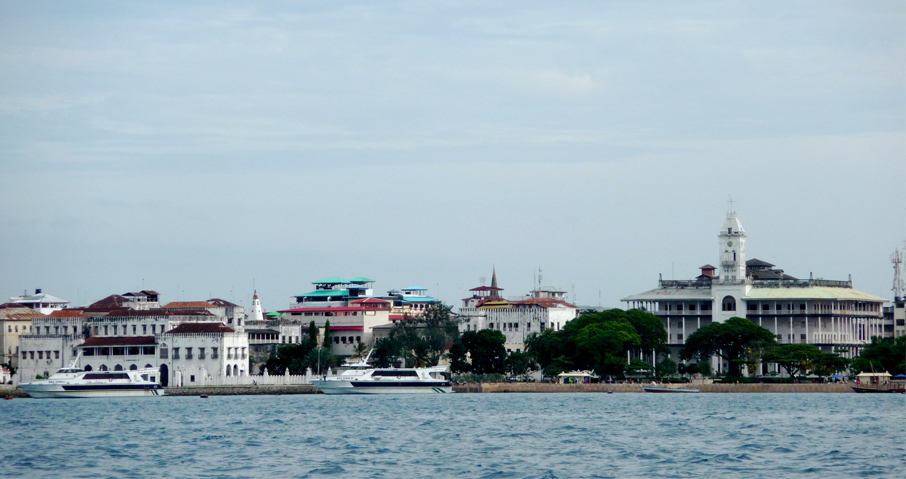








Zanzibar was once one of the Africa’s most prosperous country. The spices that it grew, so desired by the rest of the world, made it so. The wealth derived from the spice trade was augmented by the slave trade, indeed the spices and the slaves went hand-in-hand as Zanzibar’s spice plantations depended on slave labor, and there are still sad relics of this trade in human flesh to be found on the island. Zanzibar was one of the most important ports in Africa. Goods from Britain docked here before they moved on to other parts of Africa. No longer very prosperous in the fiscal sense, the island has a wealth of historical monuments to visit which commemorate the African, British and particularly Arab influences – Sultan’s palaces, cathedrals, mosques, fortresses and old colonial houses. Its maze of narrow streets, alleyways and little shops cry out to be explored and its beautifully carved doors, decorated with heavy brass studs, speak of past wealth and mystery within. More Arab in spirit than interior Africa, Zanzibar Stone Town seems to have stepped out of the Arabian Nights.
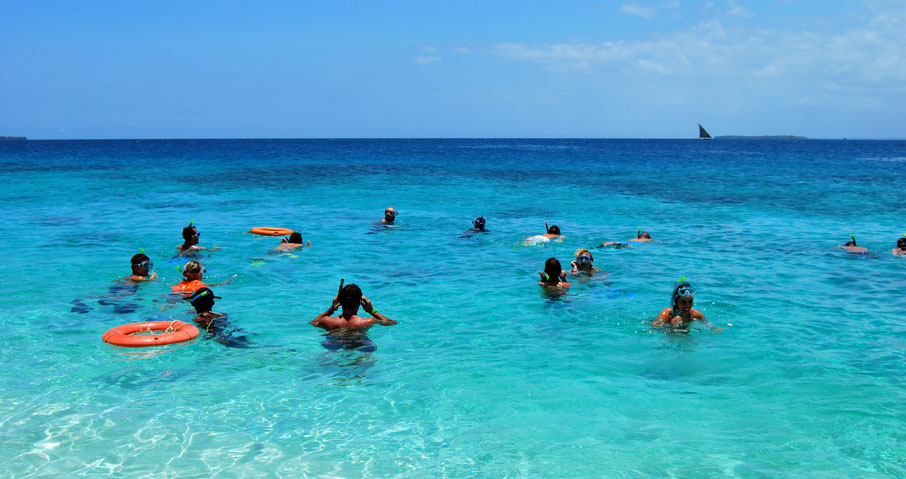
Zanzibar is also is an excellent destination for a leisurely beach holiday. Groves of fruit and spice trees, swaying palms, lagoons and coral sands combine with its exotic history to make Zanzibar enchanting. Both the main island and the almost impossibly romantic smaller islands have some beautiful beaches with gorgeous white sands and turquoise seas. Mnemba, Chumbe and Pemba islands are particularly outstanding; though pricey they offer world-class diving and snorkeling. The island has always drawn travelers with its warmth and languor, its fascinating history and its mysterious ambience- the spell of Zanzibar shows no sign of fading.
Zanzibar primarily is a beach destination, however we recommend that visitors spend at least 2 nights in historic Stone Town. If you plan to stay for more than a week then you should consider staying on Zanzibar Island as well as on Pemba, Chumbe and Mnemba. The diving, snorkeling and fishing off these islands are exceptional, although the accommodation can be pricey. Overall, Zanzibar is an excellent value-for-money beach destination with good quality accommodation, some of it out of this world.
USEFUL TIPS
Do not damage or remove coral. It is a living organism host to many rare and endangered species, which takes many years to form.
Do not remove shells, starfish or any other sea-flora. Removal seriously disrupts the ecosystem and is illegal. The areas outside the parks and reefs are threatened by excessive shell collection. Empty shells provide homes for hermit crabs and other fishes.
Do not buy shells and other marine animal products as souvenirs as this encourages further plundering of the reefs and beaches.
Do not discard litters into the water; it is environmentally unfriendly and illegal. Marine turtles can confuse clear plastic waste with jellyfish and they will die if they eat it.
Hand feeding of fish is discouraged. Certain species are dangerous and disrupts traditional feeding patterns.
Hook and line is allowed in the marine reserves, never in marine parks. Spear guns are not permitted.
Please respect culture and tradition. Insensitive behavior, such as taking photographs of people without their consent or failure to observe local customs, can cause offense.
Please note that being nude or semi-nude in public is unacceptable in Zanzibar, especially in villages or towns. Nudity is culturally offensive to the Muslim community prevalent in Zanzibar.